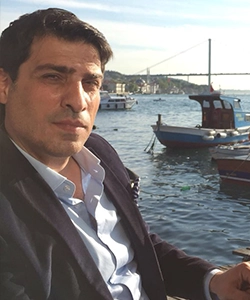
Safak Tunc
Safak Tunc was born in 1968 in Elazig, Turkey. He completed his primary education at Koca Ragip Pasa Primary School and his secondary education at Gedikpasa Middle School, both located in the Laleli district of Istanbul. In 1994, he graduated from the Department of History at the Faculty of Letters, Istanbul University. He completed his military service as a translator at the Archive Directorate of the Ministry of National Defence.
In 2004, he published his first book titled Tophane-i Amire ve Osmanli Devleti’nde Top Dokum Faaliyetleri (Cannon Casting Activities in the Ottoman Empire). His articles on a wide range of historical subjects have appeared in various academic journals. These topics include Medieval Europe, the Industrial Revolution and Mercantilism, 19th-century Ottoman firearms technology, the life and innovations of Ahmed Sureyya Emin Bey, Ottoman fishing guilds, travellers and travelogues, Istanbul’s cultural history, and the reign of Sultan Abdulhamid II.
Between 2011 and 2013, he completed his MA at Istanbul University’s Institute of Social Sciences in the Department of Istanbul Studies, earning the title of “Istanbul Specialist”. His thesis, Coffeehouse in the Ottoman Capital City and the Role of Coffeehouse Culture, is set to be published as a prestigious academic work.
In 2010, his book Sehristan – The Imaginary City of Travellers: Istanbul, was published by the Istanbul Chamber of Commerce as part of the city’s European Capital of Culture initiative. His subsequent work, The Last Universal Empire in History: Devlet-i Aliyye-i Osmaniyye, was published by Yediveren in 2015.
In 2017, his book Dogru Tarih Kuran (True History – Quran), which explores Quranic stories from a historical perspective, was published by Motto. After nearly eight years of translation work, he completed Turkish editions of three works by Ibn Arabi: Shajarat al-Numaniyya fi al-Dawla al-Osmaniyya, Kitab al-Tanazzulat al-Mawsiliyya, and Kitab al-Huwa.
He wrote the script for the opening presentation of the Adana 2015 International Congress on Islam & Medicine, organised by the Governorship of Adana, Cukurova University, the Prophetic Medicine Association, and the Cukurova Development Agency.
Together with miniature artist Reza Hemmatirad and curator Melis Uludag, he researched and authored the texts for a portrait book featuring Ottoman sultans and their mothers (Tesavir-i Al-i Osman). He also serves as the historical advisor for a special collection of 36 works attributed to Mimar Sinan.
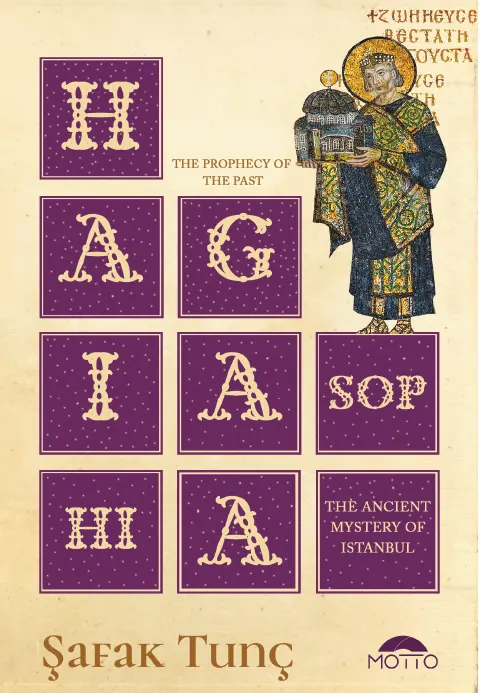
Currently, he is working on several new projects including The Prophecy of the Past: Hagia Sophia, The Hidden History of Humanity from Antiquity to Present, The Last Universal Emperor: Sultan Abdulhamid II, and The Lost Face of History, co-authored with theologian and writer Hizir Ercan.
Serving as the chief advisor to the Ottoman dynasty family, Safak Tunc regularly participates in history conferences and panels in Turkey and abroad, often alongside members of the Ottoman lineage such as Sehzade Abdulhamid Kayıhan Osmanoglu and Nilhan Sultan Osmanoglu.
In 2015, he took part as a speaker at the International Conference on Conflict and Cooperation in the Balkans, hosted by Istanbul Aydin University, moderated by former European Court of Human Rights Judge Prof. Peter Jambrek. Other prominent participants included Sultan Nihal Osmanoglu (granddaughter of Sultan Abdulhamid II), Archduke Georg von Habsburg, Dr. Rinaldo Marmara, Dr. Dhurata Sadiku Hoxha, Prof. Dr. Kenan Gursoy, Dr. Ibrahim Pazan, Asst. Prof. Fabio Grassi, and Prof. Dimitrij Rupel.
At this conference, he shared his views on various topics such as: How Europe Entered War in 1914 and Its Global Consequences, The Importance of Vatican Archives for Turkish History, Ottoman Perspectives on Balkan Nations, Security Threats in State-Building Processes – The Case of Kosovo, Vatican Policies in the Balkans During the Woytila Era, and The Rise and Fall of Yugoslavia.
- Male
- 1